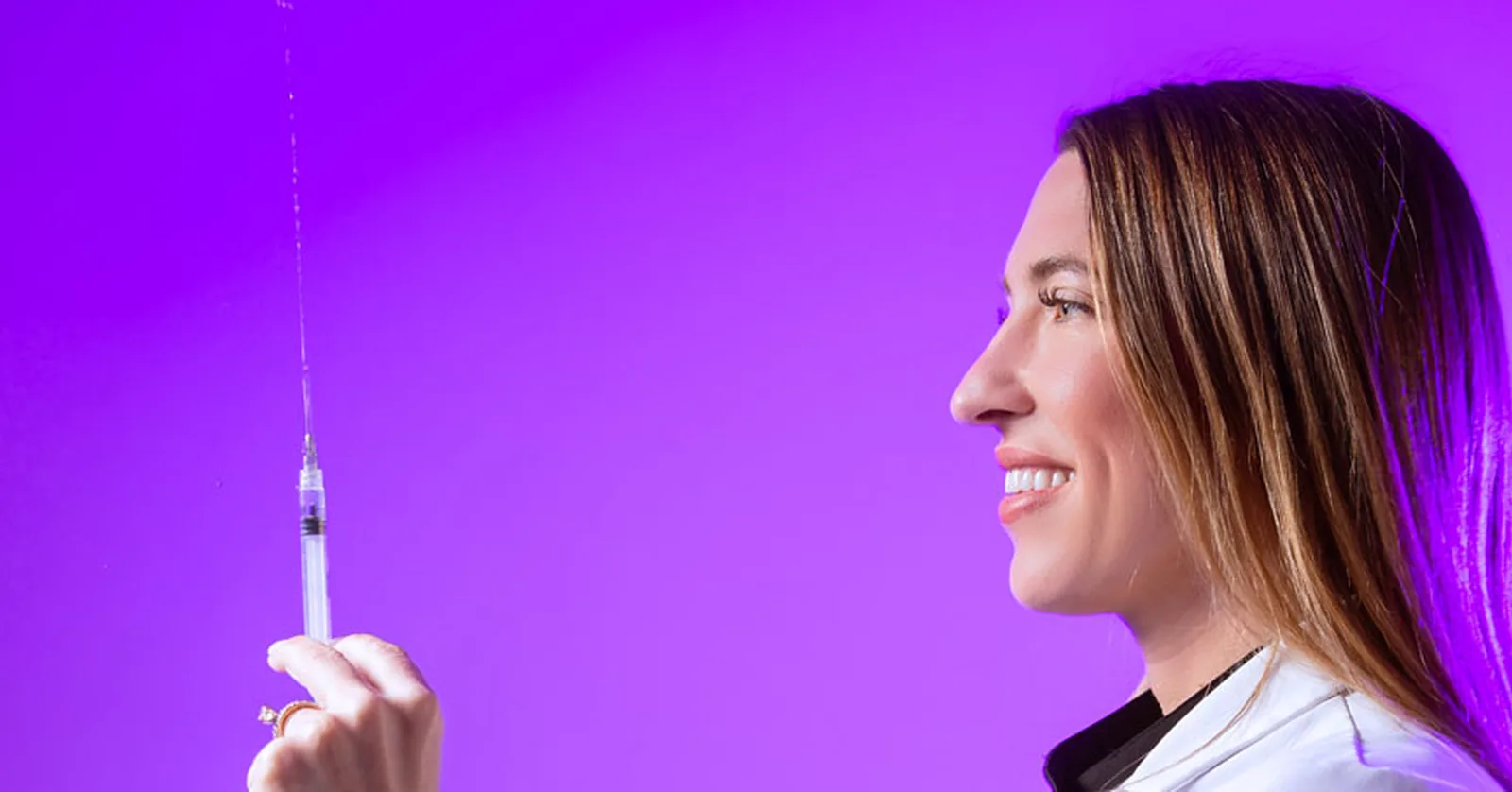
If you're looking for Botox in El Paso and wondering how Jeuveau compares, here's the short version: both are wrinkle-relaxing toxins — botulinum toxin type A neuromodulators — that temporarily soften movement lines. The better fit depends on the areas you want to treat, your anatomy and what your provider recommends after examining your face. This guide explains the difference, including FDA-labeled uses, plus timing, candidacy and what happens at a complimentary consultation at ADI MedSpa. Results vary, and a provider decides whether treatment is right for you.
What Botox in El Paso involves
Botox Cosmetic (onabotulinumtoxinA) is a botulinum toxin type A neuromodulator. It temporarily relaxes the muscles behind dynamic wrinkles — the lines that form when you frown, squint or smile — so those lines look softer. At ADI MedSpa in El Paso, Botox is given under physician direction, with the aim of looking refreshed, not frozen.
ADI uses "toxins" as the umbrella term for these neuromodulators. Placed correctly, they are meant to soften lines while you keep your natural expression. The approach is refinement, not transformation: subtle, balanced, never overdone.
Botox Cosmetic is FDA-approved in adults for the temporary improvement of moderate to severe frown lines (glabellar lines, often called the "11s"), crow's feet (lateral canthal lines), forehead lines and platysma bands, the vertical bands that can show between the jaw and neck.
ADI may also discuss other aesthetic uses of Botox, such as a subtle brow lift, a lip flip or softening chin dimpling. Those uses are not the same as the FDA-labeled indications above, and whether they belong in your plan is a decision for your provider.
Care is physician-led. Nurse practitioners deliver treatment under the oversight of Medical Director Dr. Farooque Ahmed, MD, an Internal Medicine physician with 30 years of medical expertise, who reviews treatment plans. Every plan is tailored to your facial anatomy and your goals. You can read more on ADI's toxins page.
If the concern is lost volume or deeper folds rather than movement lines, dermal fillers work differently — they restore volume rather than relaxing muscle. Your provider can explain which approach fits each concern, and you can see the full range on the injectables page.
Some patients also combine toxin treatment with skin tightening. That's a different plan than toxins alone; we cover it separately in our guide to Morpheus8 and Botox treatments.
Jeuveau vs Botox: how they compare
Jeuveau (prabotulinumtoxinA-xvfs), made by Evolus and sometimes called "Newtox," is also a botulinum toxin type A neuromodulator. Both products temporarily relax the muscles behind dynamic wrinkles. The key difference is what each is FDA-approved to treat: Jeuveau is labeled only for moderate to severe frown lines between the brows, while Botox Cosmetic is labeled for more facial areas.
Both belong to the same family of medicines, but they are not the same product, and their units are not interchangeable. The FDA-approved labels state that units of one botulinum toxin product cannot be compared to or converted into units of another. If you switch, your provider doses the new product to your anatomy rather than converting unit for unit.
Jeuveau is FDA-approved for the temporary improvement of moderate to severe glabellar lines in adults. It is not FDA-approved for crow's feet, forehead lines or neck bands. Those uses would be off-label and should not be treated as approved.
Botox Cosmetic's labeled uses, as noted above, include frown lines, crow's feet, forehead lines and platysma bands.
ADI offers both so your provider can match the product to your goals. Botox Cosmetic has been used in aesthetics for decades; Jeuveau is a newer option, approved in 2019, made with contemporary manufacturing. Neither is automatically the better choice. The right fit depends on the areas you want to treat, how you've responded to toxins before and what your provider recommends.
Learn more about Jeuveau at ADI MedSpa.
When you'll see results, and how long they last
You'll usually start to see softening within a few days, and the full effect is often visible at 10 to 14 days. Results with either product typically last about three to four months, though some people see a shorter or longer window. First treatments may wear off sooner. Results vary, and the effect is temporary.
ADI notes that with Jeuveau, about half of patients notice improvement within two days. That is a possible early change, not a promise that Jeuveau works faster for everyone, and it is not the same as seeing your full result. Plan on judging the finished look at about 10 to 14 days.
The American Society of Plastic Surgeons describes a typical Botox duration of three to four months, with some people closer to two months and others closer to four to six. Mayo Clinic similarly describes an effect that often lasts about three to four months, with follow-up injections usually spaced at least three months apart.
To maintain the look, ADI notes that many Jeuveau patients schedule around three treatments a year. Your provider will set the interval that is appropriate for you. Jeuveau's label says retreatment should be given no more often than every three months.
Units, comfort and aftercare
There is no single unit count for forehead lines, frown lines or crow's feet that fits everyone. Your provider doses to your anatomy and goals. Injections are typically quick, and most patients describe a minor pinch. Topical numbing is available on request. There's no downtime, though you may have minor redness or small bumps for a few hours.
ADI uses fine-gauge needles. After treatment, avoid lying flat or strenuous exercise for four hours, and follow any other instructions your provider gives you.
These treatments have risks and side effects. Common ones can include pain, swelling or bruising at the injection site, headache and, in some cases, a droopy eyelid or uneven brow. Rarely, botulinum toxin can spread beyond the treated area and cause more serious symptoms, such as muscle weakness or trouble speaking, swallowing or breathing. Seek medical care right away if that happens. Your provider will review risks, side effects and your health history before any treatment.
Who is a candidate, and can you switch products?
A provider decides candidacy after reviewing your goals and health history. These treatments are generally not recommended if you are pregnant or breastfeeding. They aren't used when there's an infection at the injection site, and certain neuromuscular conditions can raise risk. You can often switch between Botox and Jeuveau if your provider agrees, but the units are not interchangeable.
Mayo Clinic notes that, as a rule, health care providers don't recommend Botox if you're pregnant or breastfeeding. The product labels also list contraindications that include known hypersensitivity to any botulinum toxin preparation or to an ingredient in the formula, and infection at the proposed injection site. People with certain neuromuscular disorders — such as myasthenia gravis, Lambert-Eaton syndrome or ALS — may be at higher risk of significant weakness and other complications. Tell your provider about your medical history, medicines and any recent toxin treatments.
If you've been treated with one product and are curious about the other, bring that up at your visit. Switching is something your provider can consider, then dose the chosen product to your face rather than converting units. How often you can be treated is also a clinical decision, typically with several months between sessions.
What to expect at your complimentary consultation
The first step is a complimentary consultation at ADI MedSpa in El Paso. You'll talk through what you'd like to soften and what you'd like to keep, hear how Botox and Jeuveau differ — including labeled uses, timing, risks and side effects — and leave with a personalized plan if treatment is a good fit. There's no pressure to proceed.
Treatments are performed by nurse practitioners under the oversight of Dr. Farooque Ahmed, MD. Plans are built around your anatomy and your timeline, not a one-size-fits-all package.
Ready when you are: book your complimentary consultation online or call (915) 474-3239.
ADI MedSpa is at 11331 James Watt Rd, Bldg. 100, El Paso, TX 79936, and sees patients Monday–Friday, 8 a.m. to 5 p.m.
Frequently asked questions
How long does Botox last?
Typically about three to four months, though results vary. Some people see a shorter or longer window, and first treatments may wear off sooner. To maintain the effect, most people return a few times a year, with timing set by their provider.
What is the difference between Botox and Jeuveau ("Newtox")?
Both are botulinum toxin type A neuromodulators that temporarily relax the muscles behind dynamic wrinkles. Jeuveau, made by Evolus, is FDA-approved only for moderate to severe frown lines between the brows. Botox Cosmetic is FDA-approved for frown lines, crow's feet, forehead lines and platysma bands. Units of one product are not interchangeable with units of the other.
When will I see results, and does Jeuveau work faster?
Softening usually begins within a few days, and the full effect is often visible at 10 to 14 days. ADI notes that with Jeuveau, about half of patients notice improvement within two days. That is an early change some people notice, not proof that Jeuveau works faster for everyone, and it is not the same as your full result. Results vary.
How many units do I need for forehead lines, frown lines, or crow's feet?
It depends on your muscles, your anatomy and your goals. Your provider doses to you rather than a fixed unit count for each area, and units cannot be converted from one toxin brand to another.
Does it hurt, and is there downtime?
Injections are typically quick, and most patients describe a minor pinch. Fine-gauge needles are used, and topical numbing is available on request. There's no downtime. You may have minor redness or small bumps for a few hours. Avoid lying flat or strenuous exercise for four hours after treatment.
Will I look frozen?
That's not the goal. When toxins are placed with restraint, the aim is to soften lines while you still look like yourself — rested, not frozen. A stiff or heavy look can happen if too much product is used or if placement is off, which is why dosing and physician-directed care matter. Results vary.
Can I get Botox or Jeuveau if I am pregnant or breastfeeding?
Generally no. Health care providers typically do not recommend these treatments during pregnancy or while breastfeeding. Tell your provider if you are pregnant, planning to become pregnant or breastfeeding, and they will advise you.
How often can I be treated, and can I switch between Botox and Jeuveau?
Most people are treated a few times a year, and product labels call for waiting at least about three months between treatments. You can discuss switching products with your provider. If you do switch, they will dose the new product to your anatomy; the units are not interchangeable.
Ready to talk through Botox or Jeuveau in El Paso? Book a complimentary consultation with our physician-led team, or call (915) 474-3239.
This guide is general information, not medical advice. Talk with a qualified provider about your health history and goals before starting any treatment.
Sources
Short source list for the claims above:
- ADI toxins / Botox page: Botox and Jeuveau offered as physician-directed toxins; "toxins" as the umbrella term; typical 3–4 month duration; softening within a few days and full effect often at 10–14 days; Jeuveau wording that about half of patients notice improvement within 2 days; additional Botox uses ADI may discuss (brow lift, lip flip, chin dimpling); comfort, optional numbing, no downtime, 4-hour aftercare; Dr. Farooque Ahmed, MD, reviews plans and guides nurse practitioners; complimentary consultation.
- ADI Jeuveau page: prabotulinumtoxinA-xvfs; Evolus; "Newtox"; FDA-approved for moderate to severe frown lines; duration up to about four months; around three treatments per year for many patients; address, hours and phone.
- ADI injectables and dermal fillers: toxins vs hyaluronic acid fillers (movement lines vs volume).
- Combination-care mention only: Morpheus8 and Botox.
- Botox Cosmetic Prescribing Information (DailyMed, updated Oct. 18, 2024): labeled adult uses (glabellar lines, crow's feet, forehead lines and platysma bands); contraindications; neuromuscular caution; pregnancy and lactation data limits; units not interchangeable.
- FDA platysma-band supplement approval, Oct. 18, 2024.
- Jeuveau Prescribing Information (DailyMed): labeled only for moderate to severe glabellar lines in adults; retreatment no more often than every three months; units not interchangeable.
- Jeuveau FDA approval letter, Feb. 1, 2019.
- ASPS, "How long does Botox last?": typical 3–4 month duration; shorter or longer ranges; first treatments may wear off sooner.
- Mayo Clinic, "Botox injections": onset and duration; follow-up usually at least three months apart; generally not recommended in pregnancy or while breastfeeding; common side effects and rare spread-of-toxin symptoms.